

Today, I will be sharing a selection of photographs that I have taken in Malta over the years.
Malta is a small country, covering just 316 square kilometres. It is also one of the most densely populated countries in the world. Yet, despite its small size and population density, there are still plenty of opportunities to escape into nature and discover beautiful landscapes, as well as countless historical locations.
I hope you enjoy this little photographic journey around our beautiful islands.
Malta is surrounded by the sea, and you can drive from one end of the island to the other in about an hour, provided you don’t encounter too much traffic. Unfortunately, that is becoming a bit of a challenge these days! Crossing the island from east to west can take around 40 minutes.
I sometimes take for granted the fact that, somehow, I manage to see the sea almost every day. I live in central Malta, yet even during my morning drive, I can catch a glimpse of the sea on the horizon.
Perhaps it is one of those little things that we should appreciate more often.


If I had to describe Malta’s cultural heritage, I would say that it has been shaped by several civilisations, with religion and its strategic position in the Mediterranean playing particularly important roles.
Religion has always had a significant place in Maltese society. In fact, Malta is home to some of the oldest prehistoric temples in the world. These include the temples of Ħaġar Qim, Mnajdra and Tarxien on the island of Malta, and Ġgantija in Gozo. These structures date back thousands of years, long before Christianity reached the islands.
Malta is predominantly Roman Catholic, and although the importance of religion in everyday life may have declined over the years, its influence remains visible everywhere. Churches, chapels, statues, religious paintings, village feasts and other traditions are all part of the country’s cultural identity.

Another important factor that shaped Malta’s history was its geographical location. Situated almost in the centre of the Mediterranean, the islands occupied a strategic position between Europe and North Africa. Throughout history, this made Malta an important location for maritime powers seeking to control Mediterranean trade routes and military movements.
Perhaps one of the most visible reminders of this strategic importance is the country’s impressive fortifications. During the rule of the Knights of St John, particularly following the Great Siege of 1565, Malta underwent extensive fortification. Valletta itself was founded in 1566 and developed into one of the most impressive fortified cities in Europe.
When the British took control of Malta, they continued to strengthen its military infrastructure, adding further fortifications and military installations as the island developed into an important naval base.
Today, all these influences have left their mark on the Maltese Islands. From prehistoric temples and magnificent churches to medieval streets, imposing fortifications and British colonial architecture, Malta is almost like an open-air museum. You don’t have to travel far to encounter another chapter of its fascinating history.


One of the things that immediately strikes you when exploring Malta is the abundance of churches and chapels. They are an integral part of the islands’ landscape and cultural heritage.


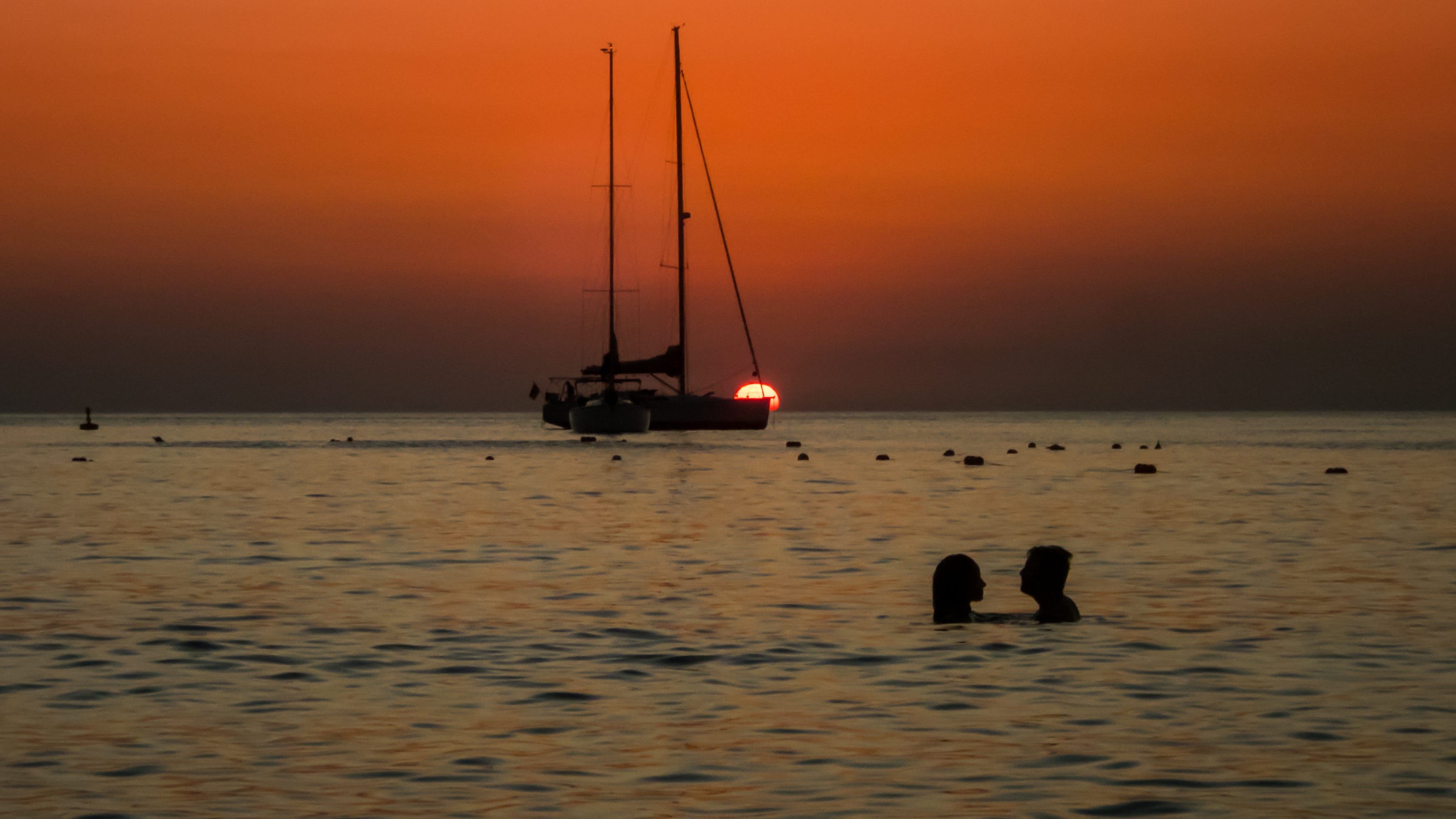
There are days when capturing a beautiful sunset or sunrise can be quite challenging, especially when dust from the Sahara hangs in the atmosphere or when the weather is particularly dull.
However, I find that as the seasons begin to change, particularly from summer to autumn and from winter to spring, we sometimes experience some spectacular displays of colour. These transitional periods can offer wonderful opportunities to capture beautiful sunrises and sunsets.


These photographs of the Blue Grotto show that I never get bored of visiting the same place more than once. The same location can always offer a different photographic opportunity. The angle might change, the weather might be different, or the light might fall differently on the landscape. Every visit offers the possibility of capturing something unique.


Thank you for reading. If you enjoyed this reflection, consider subscribing for future posts exploring photography, life, and the stories behind the moments we often take for granted.
---
About the Author
Sergio Morana is an educator, photographer and writer based in Malta. Through photography and writing, he explores life’s meaningful moments, personal growth, and the stories that connect us.
📷 Photography: Holy Communions • Confirmations • Portraits • Family Sessions • Events
Malta’s Coffee Shops for Coffee Lovers

This article is a follow-up to my previous piece about coffee shops in Malta. In that article, I focused primarily on cafés that offer beautiful views and a relaxing atmosphere. This time, however, I want to highlight a different kind of coffee shop: places that are perfect for a quick meeting, a short break from a busy day, or simply enjoying a good cu…
Two Strangers, One Photoshoot: Getting to Know Chiara

There was mutual trust and a shared willingness to work together to produce a set of photographs that we would both appreciate. Well, to be honest, it mattered more to me that Chiara loved the photographs than that I did. After all, I was the photographer, but she was the person who would be looking at these images and seeing herself through my lens.